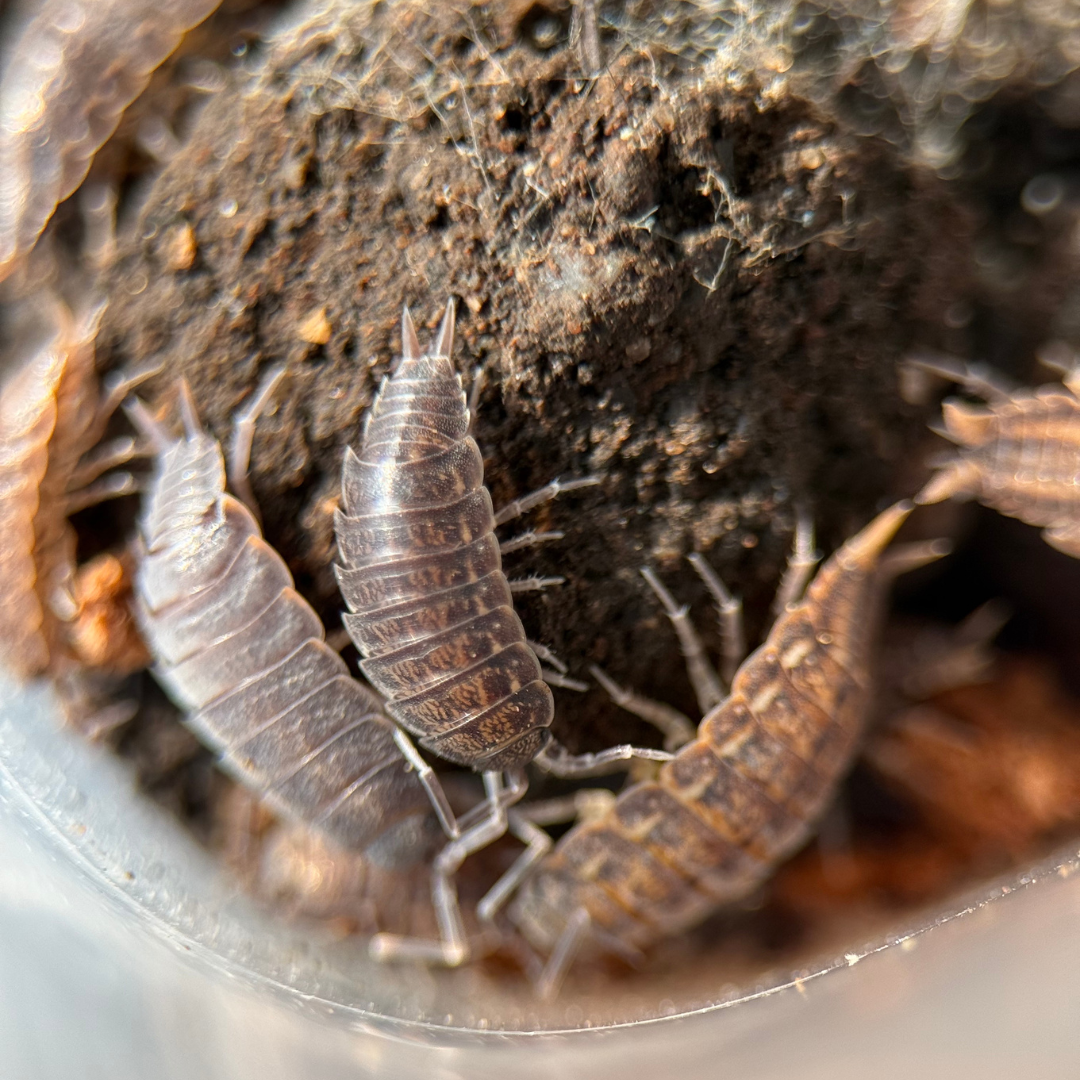
Isopods Porcellionides Sexfasciatus – Six Striped Isopods
$20.00
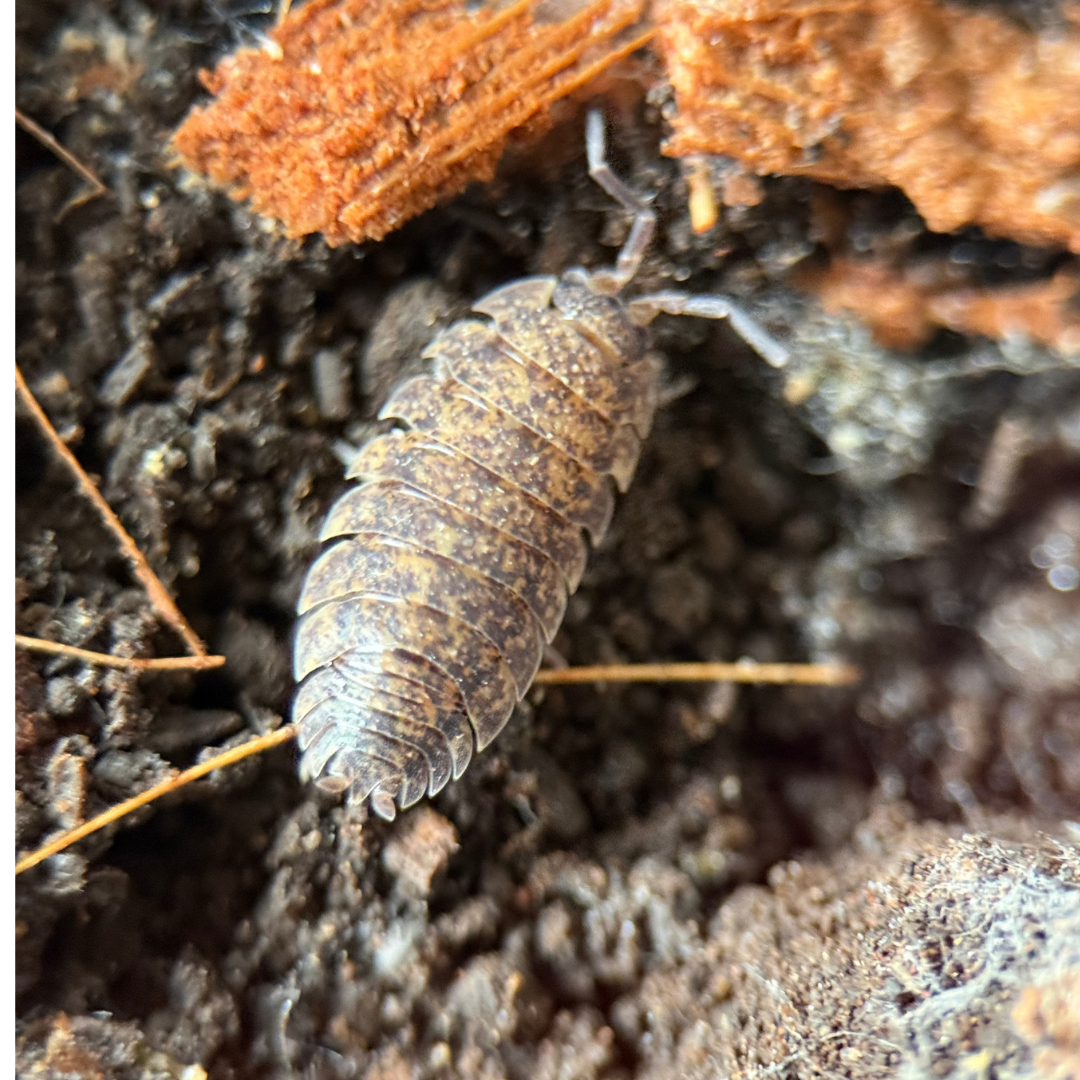
The six striped isopod or porcellionides sexfasciatus is native to Spain and areas of Mediterrean Europe, but like many isopods has become naturalised in Australia. Isopods, commonly called pill bugs, slaters or woodlouse, make a great clean up crew in vivariums and bioactive terrarium set ups. These ones are commonly known as Six Striped Isopods.
These Six Striped isopods have been captive bred in South Australia. They are a hardy, quick and easy to keep isopod that copes with more arid enclosures well. They were originally found in coastal areas, in dry conditions where no other isopods were located. Ideal temperatures for keeping the Six Striped Isopods are similar to comfortable room temperatures, around 18-29 degrees. Unlike some isopods, the Six Striped isopod is unable to roll into a ball (conglobation). They tend toward greys and copper tones, and are known for their six stripes, running through the segments on their bodies. Enclosures should have a moisture gradient, with one side staying fairly moist and the other dry. Provide your isopods with an organic, synthetic fertiliser free substrate, along with leaf litter and bark for them to hide. Make sure to keep them out of the sun, as they prefer things a little darker. Also ensure that long term enclosures have holes for cross ventilation, so that there is some air flow.
In nature, isopods like to live under leaf litter and bark in moist, shaded areas. They are detrivores, which means they eat decomposing plant and animal matter, including faeces – which is exactly what makes them a great clean up crew.
In terrariums, isopods may nibble on plants and roots, especially if they are not given enough alternative foods to eat. A good diet will consist of leaf litter, rotting wood, and around once a week some fresh vegetables. Ideally isopods should have a source of calcium to eat, such as cuttle bone, limestone or eggshells. You can also give them small amounts of protein such as dried shrimp or fish flakes.
Each tub contains a mix of 10 Porcellionides Sexfasciatus isopods including adults and juveniles.